
What's up for election in 2026?
On 7 May 2026, voters in England, Wales, and Scotland will take part in the most significant set of elections since the 2024 General Election. From devolved parliaments to local councils, this blog outlines what’s up for election in 2026.
To find out your specific polling information, visit WhereDoIVote.co.uk. For more information on candidates, visit WhoCanIVoteFor.co.uk.
Elections
England: Local Elections
On Thursday 7 May 2026, millions of voters in England will take part in local elections. Across 136 authorities, 5,013 seats are scheduled for election.
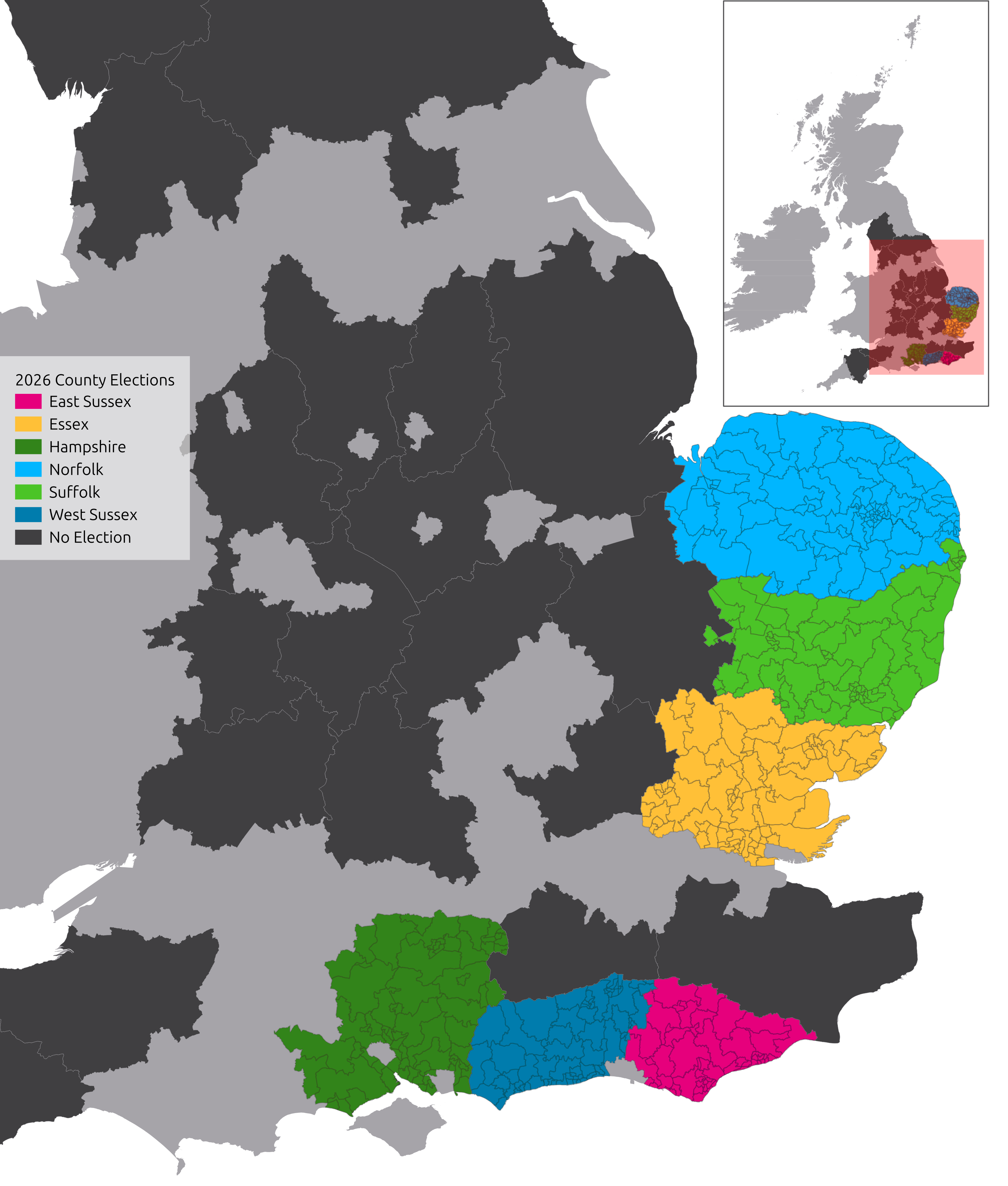
English local elections operate in four-year cycles, though scheduling varies across different authorities. While every councillor serves a four-year term in office, how often you vote depends on how your local council runs its elections.
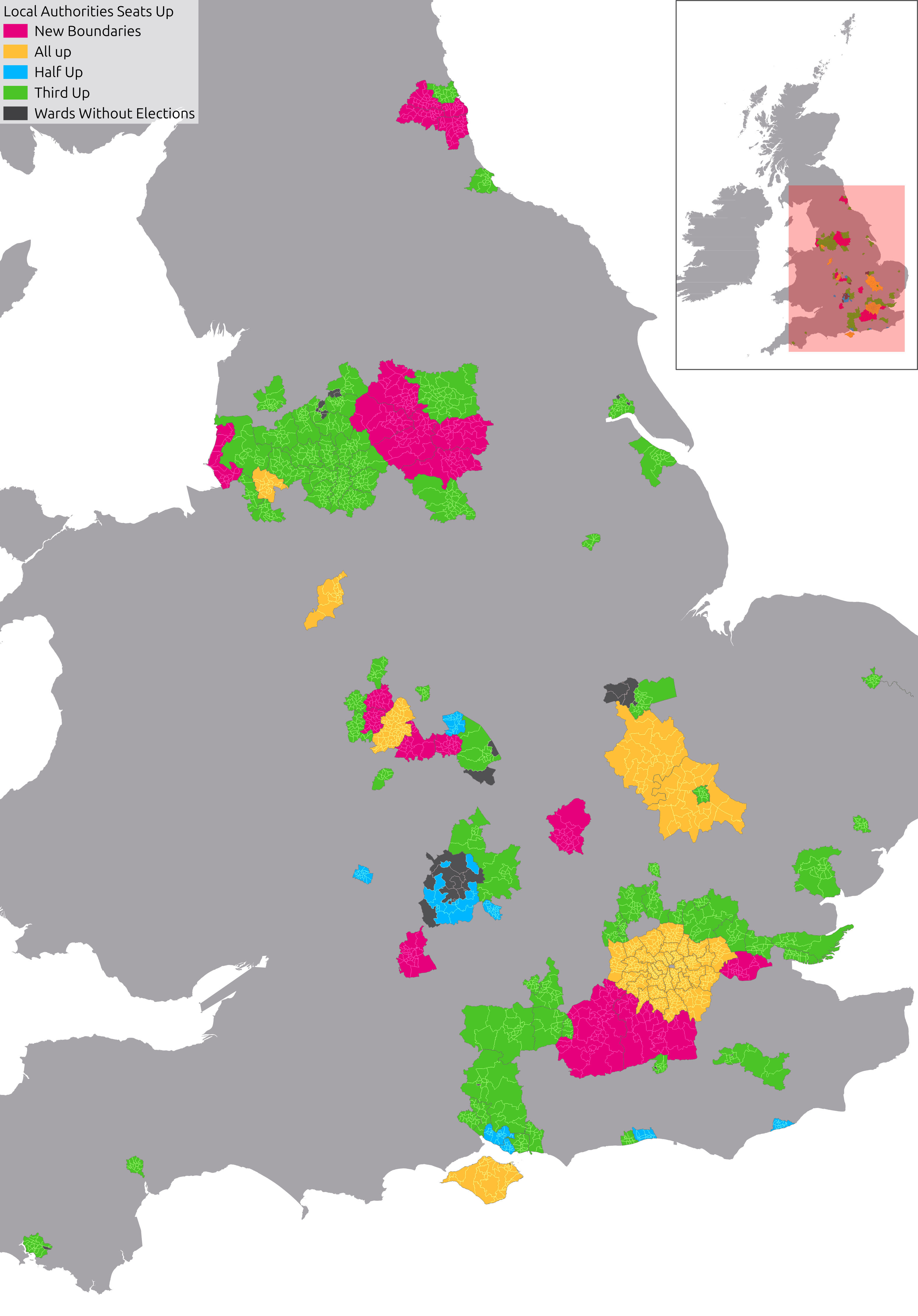
The amount of seats up for election varies by council. In 2026,
All seats will be contested in:
- 32 London boroughs
- 16 metropolitan districts
- Six county councils
- Six unitary authorities (including newly created East Surrey and West Surrey)
- Three district councils
One half of seats will be contested in:
- Seven district councils
One third of seats will be contested in:
- 16 metropolitan districts
- 12 unitary authorities
- 38 district councils
In six areas of England, voters will also elect a local authority mayor.
- Croydon
- Hackney
- Lewisham
- Newham
- Tower Hamlets
- Watford
Boundary changes
Some areas in England (coloured pink on the map above) will vote using new ward boundaries in the 2026 local elections following electoral reviews and council reorganisation.
Electoral Review
The Local Government Boundary Commission has introduced new ward boundaries to better reflect population changes and local communities. When boundary changes occur, affected councils are required to hold an all-out election meaning every councillor’s seat is up for contest. Ward boundary changes have been introduced in parts of London, the Midlands, the North East, Yorkshire, and several county councils.
Council Reorganisation
Surrey is the first area to be reorganised under the current Labour government. As the only area affected by reorganisation at the 2026 elections, Surrey provides a useful example of how reorganisation changes elections. Other areas are expected to follow in the near future.
Surrey currently has a two-tier system including one County Council and 11 District Councils. These 12 councils are to be dissolved and replaced by the two new Unitary Authorities of East Surrey and West Surrey.
In May 2026, voters in Surrey will elect councillors to these new councils. Elected councillors will initially serve on “Shadow Authorities” or, more simply, councils that don’t formally exist yet. Councillors will spend a year organising budgets and structures for East Surrey and West Surrey, preparing to officially take over on 1 April 2027, known as ‘Vesting Day’.
Postponed Elections U-turn
Earlier this year, the government announced plans to postpone elections in 30 councils undergoing Local Government Reorganisation (LGR) over capacity concerns. LGR involves dissolving two-tier County and District councils to establish single-tier unitary authorities to improve local government efficiency. Local Government Secretary Steve Reed justified the postponements by suggesting elections would be “pointless” and “costly” given that, due to LGR, these councils would eventually be dissolved.
Local elections have been postponed in 2019 and 2021 under Conservative governments to support reorganisation. However, the 2026 postponements were on an unprecedented scale, affecting 4.6 million voters and extending some councillors terms to seven years, far beyond their four-year mandate. On 16 February 2026, following a legal challenge by Reform UK, the government reversed its decision to postpone elections.
To support the councils now reorganising elections at short notice, the government has announced a £63 million support fund.
At least 343 parish councils elections will also take place across England (due to the creation of new councils this number will rise). These elections are not currently included in our postcode lookup tools.
Wales: Senedd Elections
The Senedd election on 7 May 2026 marks the most significant reform to Welsh democracy since devolution in 1999. Changes include a brand new voting system and updated constituency boundaries, but what does this mean for voters?
Welsh Electoral Reform
The Senedd Cymru (Members and Elections) Act 2024 increases the number of Members of the Senedd (MSs) from 60 to 96, meaning more representatives for voters. Wales will also move from 40 constituencies and five regions to 16 larger constituencies. These new constituencies have been created by pairing up Wales’ 32 UK parliamentary constituencies. Each constituency will elect six MSs to represent them. You can view your new constituency using the interactive map below.
New Electoral System
Another major reform under the Senedd Cymru Act 2024 introduces a new voting system called the Closed Proportional List system. Instead of casting two votes as in previous Senedd elections, voters will cast just one vote. On the ballot paper, voters will elect one political party (or an independent) rather than choosing an individual candidate. Parties will submit a list of candidates in the order they want them to be elected. As a party wins seats, those seats are allocated to candidates according to their position on the list.
The six available seats in each constituency will be distributed among parties in rounds. The D’Hondt formula is used to ensure that the final election result proportionally reflects the overall vote share.
What is being contested?
Welsh Labour have been in government in the Senedd since Wales became devolved in 1999. Heading into the election, the current share of seats in the Senedd is:
- Labour: 29 seats
- Conservatives: 13 seats
- Plaid Cymru: 13 seats
- Reform UK: Two seats
- Liberal Democrats: One seat
Scotland: Scottish Parliament Elections
Scotland will hold a Scottish Parliament election on 7 May 2026, with all 129 seats in Holyrood up for contest.
What is being contested?
The SNP have been in government in the Scottish Parliament since 2007. Heading into the election, the current share of seats in the Scottish Parliament is:
- SNP: 60 seats
- Scottish Conservatives: 28 seats
- Scottish Labour: 20 seats
- Scottish Greens: Seven seats
- Scottish Liberal Democrats: Five seats
- Others/Independents: Nine seats
Electoral System
The 129 seats in the Scottish Parliament are divided into 73 constituency seats and 56 regional seats set across eight Scottish regions. This means voters will cast two distinct votes.
The first vote is used to elect a constituency Member or Scottish Parliament (MSPs) via the First Past the Post system. The second vote is used to allocate the regional seats using the Additional Members system to ensure the overall result proportionally represents the vote share. For the regional vote, voters elect a political party or independent rather than an individual candidate. Each region elects seven MSPs from party lists.
Regional seats are allocated using the D’Hondt formula. This calculation takes into account the amount of constituency seats each party has won and then awards regional seats in rounds until all seven seats are filled. Regional MSPs are elected to seats in the order they appear on their party’s candidate list.
Boundary Changes
Following a boundary review in 2025, more than half of Scotland’s constituencies have new boundaries. You can view the new constituencies and regions using the interactive map below.
Key Dates
Make sure you register to vote by Monday 20 April.
The deadline to apply for free voter ID is 5pm Tuesday 28 April (you do not need to bring ID to vote in a Senedd or Scottish Parliament election).
Candidate lists are published by councils in England and Wales on 9 - 10 April. In Scotland, candidate lists are published on 2 April.
Election Day: Thursday 7 May, 2026
_(17195104557).jpg)