
Understanding flexible voting pilots
Voting is becoming more accessible!
In the 2026 English local elections, voters in four areas will have greater flexibility over when and where they vote. This guide outlines the government’s flexible voting pilots and highlights how our digital tool WhereDoIVote.co.uk can support voters navigate these new opportunities.
While some people choose not to vote, many are prevented by circumstantial barriers such as work commitments, caring responsibilities, accessibility challenges, travel, or general busyness.
As Samantha Dixon, Minister for Democracy, observes
“The way we vote in person has not adapted to people’s busy lives, with voters often given no choice but to cast their ballot at strictly set polling stations within limited hours.”
Recognising these constraints, the government is piloting flexible voting methods in selected English local elections to make in-person voting more convenient and accommodating to the realities of voters’ lifestyles.
What methods are being piloted?
In August 2025, the government invited councils to consider four flexible voting methods: early voting, central voting hubs, mobile stations, and even a ‘vote anywhere’ initiative to allow voters to use any polling station within their local authority area. While a number of councils submitted ambitious proposals for some of these methods, plans were narrowed to two methods across four local authorities.
The pilot will test the following methods of flexible voting:
1. Voting hubs
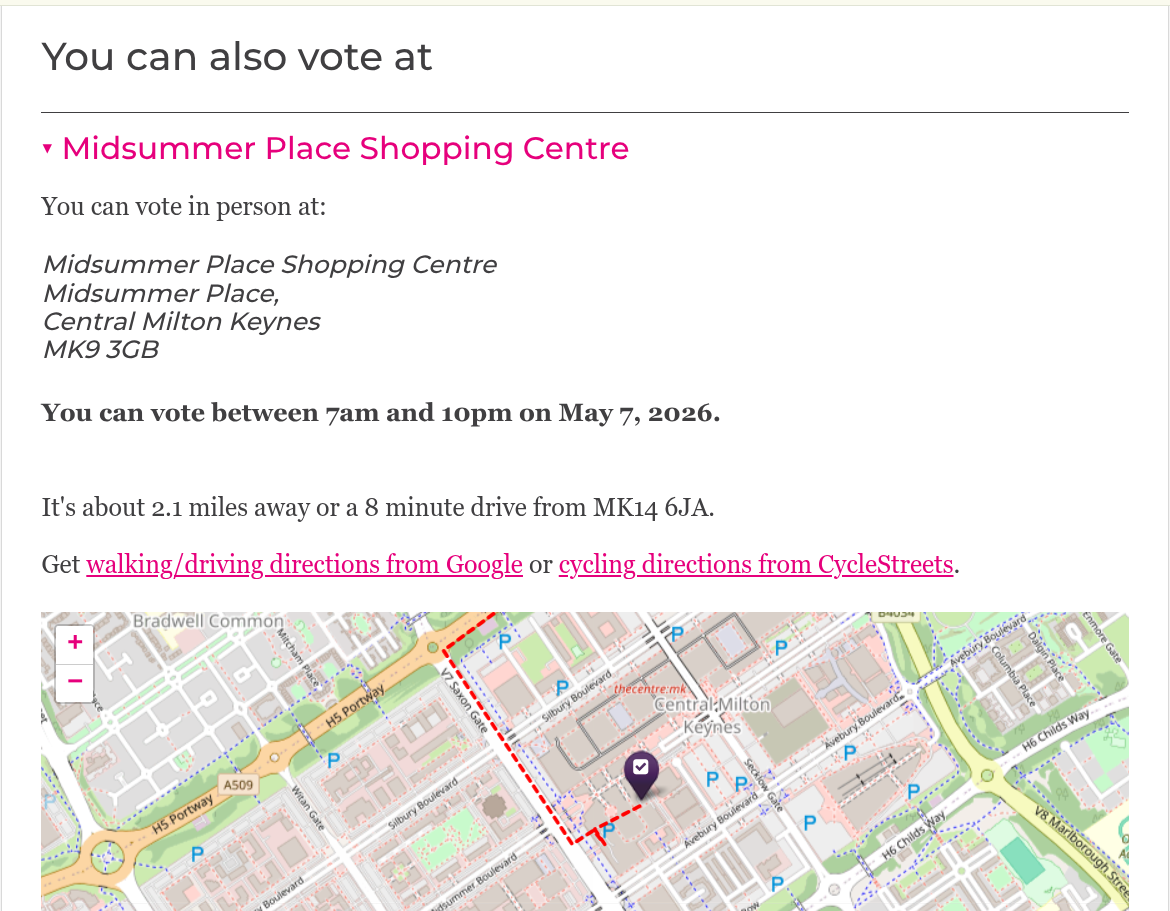
Voting hubs are centralised polling stations in large footfall areas such as shopping centres.
Currently, voters can only cast their ballot at their assigned polling station as specified on their poll card. The pilot will introduce voting hubs, in addition to regular polling stations, providing voters the opportunity to choose where to vote, offering greater convenience and accessibility.
2. Early in-person voting
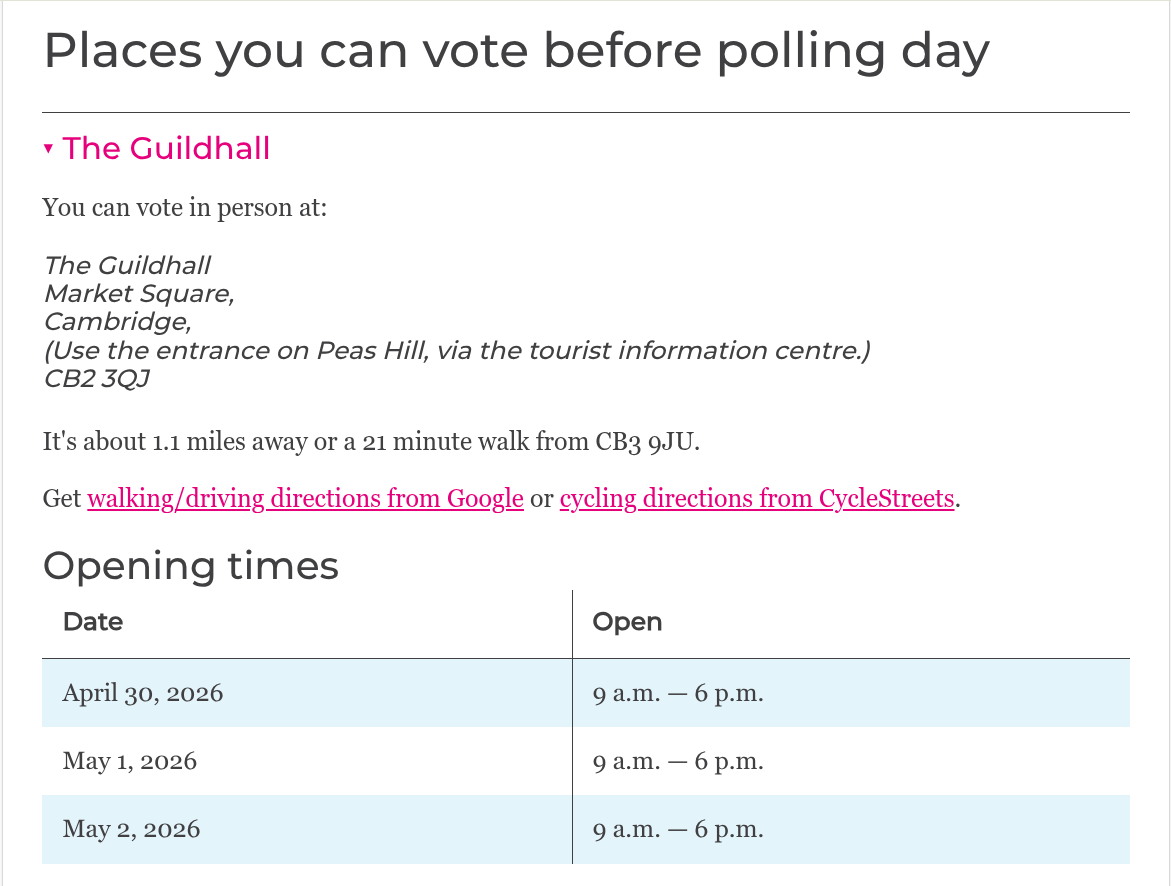
This involves opening polling stations early, ahead of Thursday 7 May, to provide flexibility to those who prefer to vote in-person but may not be able to do so on polling day. This method will enable some people to vote as early as 30 April.
Councils participating in the pilot
The flexible voting pilots are taking place in Tunbridge Wells, Cambridge, Milton Keynes, and North Hertfordshire. These locations were selected to represent various demographic and electoral contexts across rural and urban areas.
A voting hub will open in:
Milton Keynes: Thursday 7 May, 7am to 10pm.
Early in-person voting hubs will open in:
- Saturday 2 May, 9am to 6pm
- Sunday 3 May, 10.30am to 4.30pm
- Thursday 30 April, 9am to 6pm
- Friday 1 May, 9am to 6pm
- Saturday 2 May, 9am to 6pm
- Saturday 2 May, 10am to 3pm
- Sunday 3 May, 10am to 3pm
The North Hertfordshire parish and town council elections are not covered by our postcode lookup tools.
The government and the Electoral Commission will review the success of the pilots to inform the potential future implementation of flexible voting methods. The government has plans for further pilots in 2027.
Findings from previous flexible voting pilots
Flexible voting was piloted across four areas in Wales in 2022, with results showing modest engagement.
The pilot was most successful in Bridgend, an area with historically low turnout, where around 1.5% of voters cast early ballots.
However, findings from the Welsh pilot suggest that flexible voting options do not significantly increase turnout, rather they attract engaged and regular voters who would have likely participated regardless of the method available.
These findings should be considered against the typically low turnout in local elections. Overall, voter turnout at local elections in Wales dropped from 42% in 2017 to 39% in 2022. The effectiveness of flexible voting in a General Election, where turnout is traditionally the highest, is yet to be tested.
Early voting is well established in 71 countries, with evidence suggesting that flexibility can improve turnout by reducing barriers to participation.
Find your flexible voting options
To ensure we provide accurate information to voters, we have worked directly with the participating councils, incorporating their specific feedback to refine how pilot data is displayed on our site. We have collected and integrated the councils’ polling station data into our postcode lookup tool WhereDoIVote.co.uk to clearly identify flexible voting locations to users. This project has established a successful process that we can apply again for future pilots.
What stays the same?
- All standard polling stations will operate as normal between 7am to 10pm on Thursday 7 May. The pilots offer a flexible alternative and voters can continue to use their assigned polling station.
- Photo ID is required. The deadline to apply for a free voter ID is 5pm on Tuesday 28 April.
- Postal and proxy voting is still available in these areas. Apply for a postal vote by 5pm on 21 April 2026 or a proxy vote by 5pm on 28 April 2026.
Make sure you are registered to vote by Monday 20 April!
Visit WhereDoIVote.co.uk for polling station information and WhoCanIVoteFor.co.uk for information on candidates in you area.
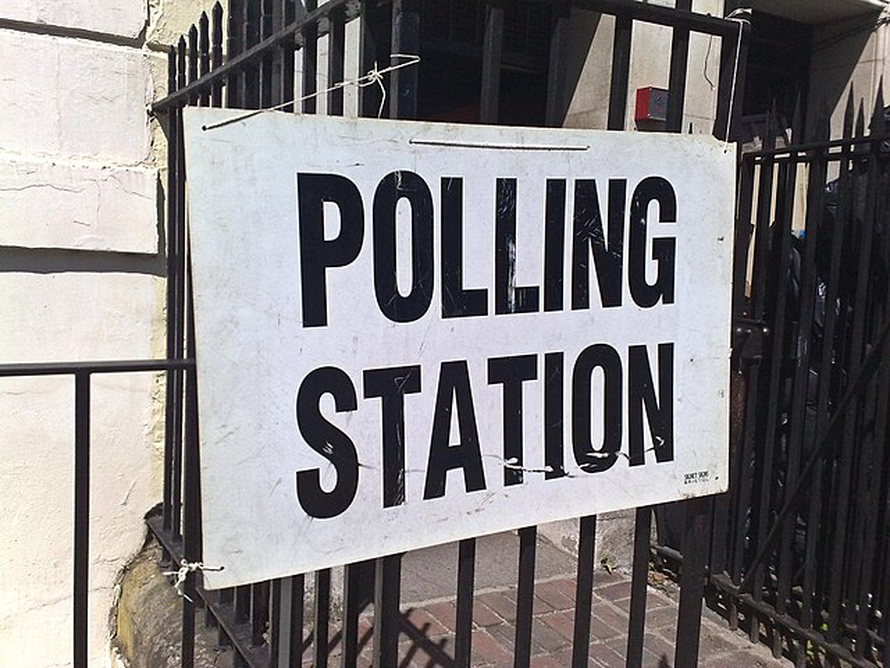
Image: Polling Station
